
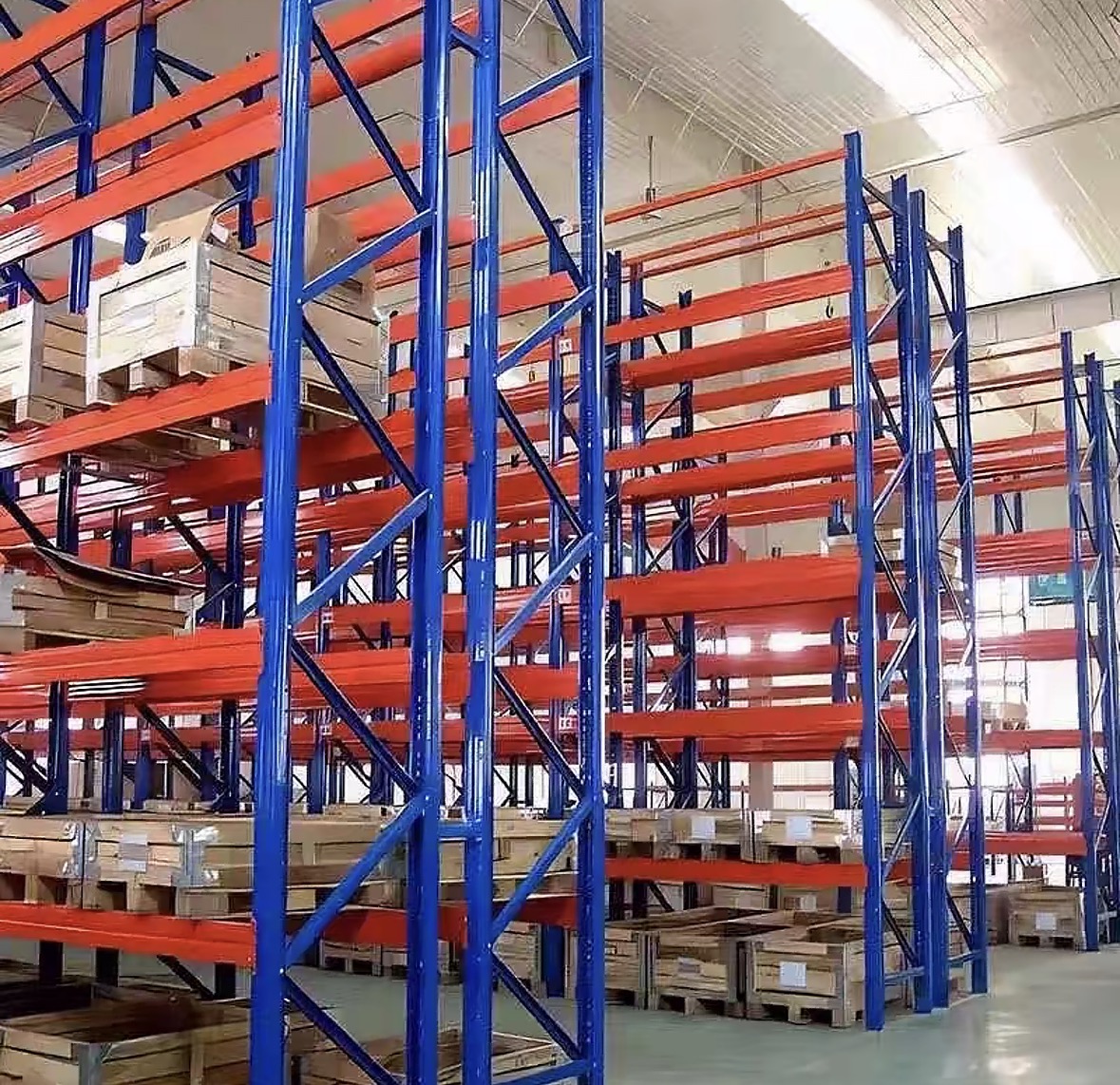
A pallet rack system is one of the most important storage solutions for warehouses, distribution centers, manufacturing plants and e-commerce fulfillment operations. It helps businesses store palletized goods vertically, increase warehouse capacity, improve inventory visibility and reduce material handling costs.
In simple terms, if your warehouse is facing problems such as limited floor space, slow picking, messy inventory or unsafe stacking, investing in the right pallet racking solution can deliver immediate operational value. The key is not just buying steel racks, but choosing a rack structure that matches your pallet size, forklift type, load capacity, SKU turnover and future expansion plan.
According to Fortune Business Insights, the global pallet racking market was valued at USD 12.88 billion in 2025 and is projected to reach USD 22.47 billion by 2034, showing a CAGR of 6.47%. This growth reflects a clear industry trend: warehouses are under pressure to store more goods in less space while maintaining faster and safer operations.
Why Pallet Rack System Demand Is Rising
The popularity of the pallet rack system is closely connected to three major industry changes: e-commerce growth, warehouse automation and higher land costs.
E-commerce and omnichannel retail are pushing warehouses to process more SKUs, smaller batches and faster delivery cycles. The U.S. Census Bureau reported that U.S. retail e-commerce sales reached USD 302.3 billion in Q1 2026, up 9.7% year over year. This means storage systems must support faster inbound, picking, replenishment and outbound workflows.
At the same time, warehouse automation is becoming mainstream. Gartner predicts that by 2028, 80% of warehouses and distribution centers will deploy some form of warehouse automation equipment. For buyers, this means the rack system must be compatible not only with forklifts, but also with WMS, barcode systems, conveyors, AGVs or automated handling equipment.
MHI and Deloitte also found that 55% of supply chain leaders are increasing their technology and innovation investment, with 60% planning to invest more than USD 1 million. This investment trend shows that warehouse infrastructure is no longer a low-priority expense. It is becoming a strategic asset.
What Is a Pallet Rack System?
A pallet rack system is a steel storage structure designed to hold palletized goods in horizontal rows with multiple vertical levels. A standard system usually includes:
Upright frames
Horizontal beams
Wire decking or steel panels
Row spacers
Pallet supports
Base plates and floor anchors
Safety guards and column protectors
Compared with floor stacking, pallet racking allows warehouses to use vertical height efficiently. Instead of spreading goods across the floor, pallets are stored upward in organized lanes, making inventory easier to locate, count and move.
For heavy-load environments, a heavy duty pallet rack is especially important. It is designed with stronger upright columns, thicker beams and higher load-bearing capacity to support large-volume goods, industrial parts, raw materials, cartons, drums or machinery components.
Common Types of Pallet Racking
Not every warehouse needs the same rack structure. Choosing the wrong system may waste space or slow down daily operations. Below is a practical comparison.
| Pallet Racking Type | Best For | Main Advantage | Limitation |
|---|---|---|---|
| Selective Pallet Rack | General warehouses with many SKUs | Direct access to every pallet | Lower storage density |
| Drive-In Rack | Large quantity of same SKU | High-density storage | Limited pallet selectivity |
| Double Deep Rack | Medium SKU variety | Better space utilization than selective rack | Requires special forklift reach |
| Push Back Rack | Fast-moving goods | High density with easier access | Higher system cost |
| Pallet Flow Rack | FIFO inventory control | Efficient for food, beverage and cold chain | Requires accurate design and installation |
| Heavy Duty Pallet Rack | Industrial and high-load storage | Strong load capacity and durability | Needs professional load calculation |
For most warehouses, selective pallet racking remains the most flexible choice. However, for high-volume storage, cold storage, raw material warehouses or manufacturing plants, drive-in racks, pallet flow racks or heavy duty pallet racks may provide better space efficiency.
How to Choose the Right Pallet Rack System
1. Confirm Pallet Size and Load Capacity
Before selecting a rack, calculate the maximum pallet weight, pallet dimensions and goods overhang. A professional supplier should ask for:
Pallet width, depth and height
Maximum load per pallet
Number of pallet positions required
Warehouse clear height
Forklift turning radius
Aisle width requirement
For example, a warehouse storing 1,000 kg pallets needs stronger beams and upright frames than a warehouse storing light cartons. Never choose racks only by price. Under-designed racks can cause beam deflection, structural damage or safety risks.
2. Match Rack Layout with Warehouse Workflow
A good pallet rack system should support the movement of goods, not block it. Before installation, analyze:
Inbound area
Storage area
Picking area
Packing area
Outbound area
Forklift traffic route
Emergency access route
If workers need frequent pallet access, selective pallet racking may be better. If goods are stored in bulk and moved by batch, drive-in or double-deep racking may save more space.
3. Consider Future Expansion
Many buyers only design racks based on current inventory. This is a common mistake. A better approach is to plan for future growth.
Ask these questions:
Will SKU quantity increase in the next 2–3 years?
Will pallet weight change?
Will the warehouse add automation?
Will storage height be expanded?
Will the company need cold storage or special material handling?
A modular pallet rack system can be adjusted, extended or reconfigured as business needs change.
Heavy Duty Pallet Rack: When Do You Need It?
A heavy duty pallet rack is recommended when your warehouse stores high-weight or high-volume goods. Typical applications include:
Manufacturing raw materials
Automotive parts
Machinery components
Building materials
Large cartons
Metal products
Industrial equipment
Bulk inventory storage
The key difference between standard pallet racking and heavy duty pallet rack is structural strength. Heavy duty systems usually use thicker steel, stronger beams, reinforced bracing and larger base plates. This improves stability under long-term high-load use.
For safety, every heavy duty rack project should include load calculation, floor condition evaluation and installation inspection. Rack safety is not only about steel thickness; it also depends on correct anchoring, beam locking, aisle design and forklift operation.
Industry Trend: Pallet Racking Is Becoming Smarter
The warehouse racking market is not only growing, but also evolving. Grand View Research estimated the global warehouse racking market at USD 9.71 billion in 2024 and projected it to reach USD 12.41 billion by 2030, growing at a CAGR of 4.2% from 2025 to 2030.
This growth is driven by more than basic storage demand. Modern warehouses increasingly require racks that can work with digital systems and automation technologies.
Future-ready pallet racking may include:
Rack location labels for WMS tracking
Barcode and QR code identification
Anti-collision protection
Smart inventory mapping
Compatibility with AGV or AMR routes
Optimized aisle design for automation
Higher-density storage for expensive warehouse space
This means buyers should not treat pallet racking as a one-time steel purchase. It should be considered part of the warehouse’s long-term operating system.
Common Mistakes When Buying Pallet Racking
Many warehouse buyers make decisions based only on unit price. However, the cheapest rack is not always the lowest-cost solution.
Avoid these mistakes:
Ignoring load capacity
Always confirm load per beam level and load per bay.Not checking floor conditions
A strong rack still needs a suitable concrete floor and proper anchoring.Choosing the wrong aisle width
Forklift type and turning radius directly affect rack layout.Forgetting safety accessories
Column guards, frame protectors and safety pins reduce accident risk.No future expansion plan
A rigid design may become expensive to modify later.Not working with a professional manufacturer
Custom warehouse conditions require customized rack design, not generic product selection.
Why Work with a Pallet Rack System Manufacturer?
A professional manufacturer can provide more than rack components. The right supplier should help with:
Warehouse layout design
Load capacity calculation
Product customization
Steel material selection
Surface treatment options
Production quality control
Packaging and shipping planning
Installation guidance
For international buyers, factory-direct supply can also reduce procurement cost and improve customization flexibility. This is especially important for wholesalers, distributors, project contractors and warehouse solution providers.
Conclusion: The Right Pallet Rack System Improves More Than Storage
A well-designed pallet rack system can improve warehouse capacity, inventory management, forklift movement, safety and long-term operating efficiency. As e-commerce, automation and supply chain investment continue to grow, pallet racking is becoming a strategic part of warehouse infrastructure.
Whether you need standard selective pallet racking, high-density storage or a heavy duty pallet rack for industrial goods, the best solution should always be based on real warehouse data: pallet size, load capacity, SKU flow, forklift type and expansion goals.
FAQ
1. What is a pallet rack system used for?
A pallet rack system is used to store palletized goods vertically in warehouses, factories, logistics centers and distribution facilities. It helps save floor space and improve inventory organization.
2. What is the most common type of pallet racking?
Selective pallet racking is the most common type because it provides direct access to every pallet and works well for warehouses with many SKUs.
3. How much weight can a heavy duty pallet rack hold?
The load capacity depends on beam length, upright size, steel thickness and rack design. Heavy duty pallet racks are usually customized according to the required pallet load.
4. How do I choose the right pallet rack system?
You should consider pallet size, pallet weight, warehouse height, forklift type, aisle width, SKU quantity and inventory turnover.
5. Is pallet racking suitable for automated warehouses?
Yes. Modern pallet racking can be designed to work with WMS, barcode systems, AGVs, AMRs and other warehouse automation equipment.
6. What safety accessories are recommended?
Common safety accessories include column protectors, frame guards, safety pins, row spacers, back mesh panels and floor anchors.
7. Can pallet racks be customized?
Yes. Rack height, depth, beam length, load capacity, color, decking type and layout can be customized based on warehouse requirements.
8. Where can I buy a reliable pallet rack system?
You should work with a professional pallet rack manufacturer that can provide layout design, load calculation, customized production and project support.
Looking for a Custom Pallet Rack System?
Looking for a custom pallet rack system for your warehouse project? Contact KAYOU to get a professional storage layout, load capacity recommendation and factory-direct pallet racking solution for your business.
Contact Us